Get FREE lab diamond jewelry on purchases over $1,000. Apply at checkout.









The Engagement Ring Anatomy: What You’re Really Looking At
Written by Manny. S

Engagement rings are everywhere, on Pinterest boards, in proposals, and on Instagram posts. We all can recognize one immediately. But ask someone to explain what components actually make up a ring, and things get a little…vague.
It almost feels like walking into IKEA for the first time. Everything looks great, but the names? Slightly confusing. Prongs? Pavé? Girdle? It all sounds more like a furniture catalog than a jewelry store.
This guide breaks it all down. By the end, you will be able to look at any ring and know exactly what you are seeing.
Table of Content
- What Is Ring Anatomy?
- The Center Stone: Where It All Begins
- The Setting: The Whole Vibe Of The Ring
- The Prongs: The Unsung Heroes
- The Head: What Cradles The Diamond
- The Shank/Band: More Than Just A Band
- The Shoulders: The Connectors You Never Noticed
- The Gallery: The Hidden Detail That Changes Everything
- To Sign Off
- Frequently Asked Questions
What Is Ring Anatomy?
An engagement ring is not just a solid piece of metal with a diamond dropped in—it is a carefully engineered structure made up of many components that each serve a specific purpose.
Understanding diamond ring anatomy is more than knowing what a ring looks like; it is about understanding why things look the way they do.
The Center Stone: Where It All Begins
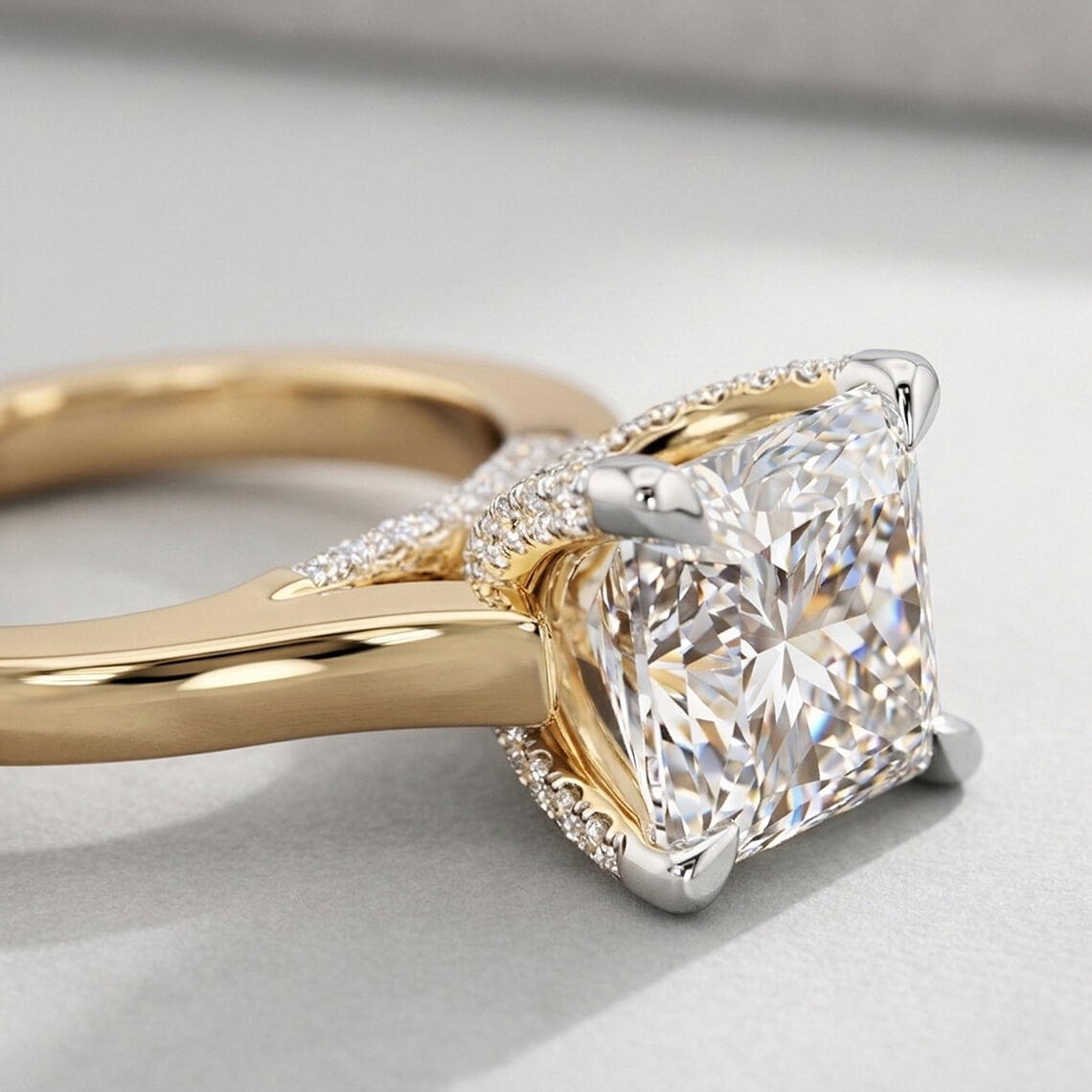
Every engagement ring is built around its center stone, and it is the focal point of everything. The cut, the setting, the metal choice, all of it radiates outwards from here.
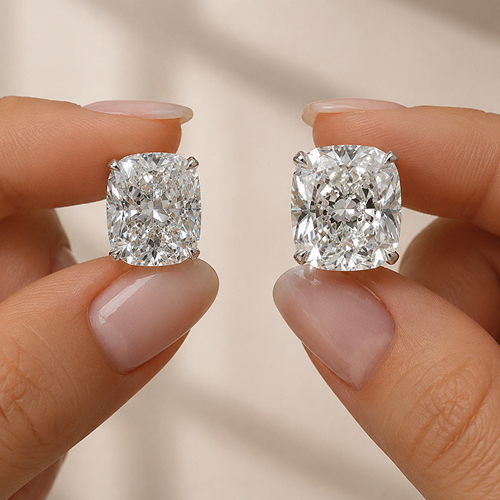
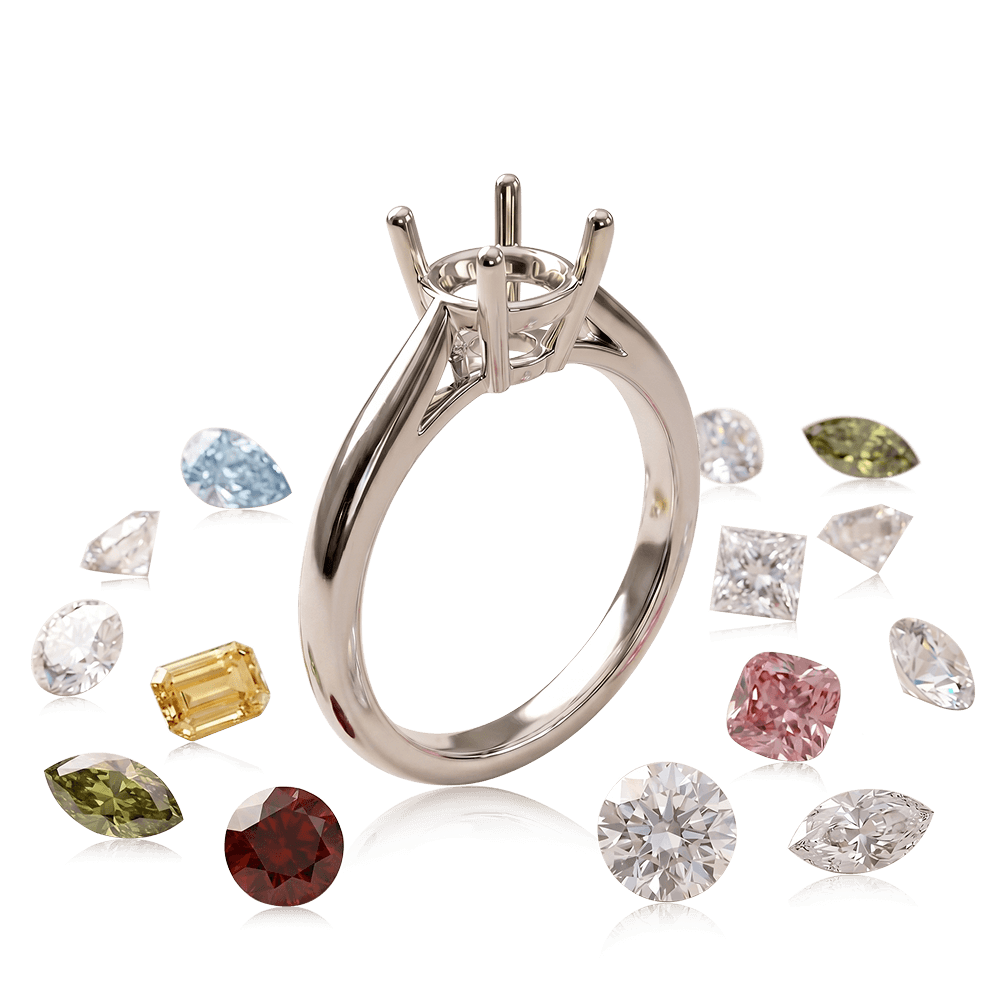
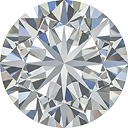
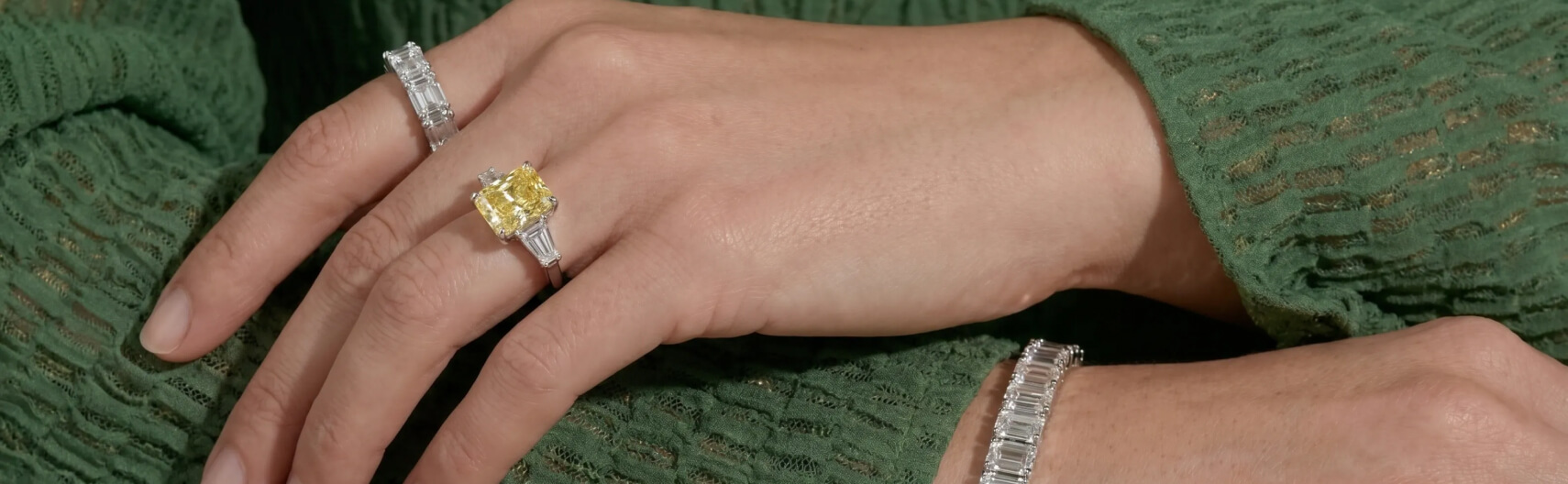
The center stone is described by its shape (round, oval, pear, cushion, etc.) and its 4 C’s (cut, color, clarity, and carat weight).
The size of the diamond directly influences every other design decision on the ring. A larger stone will need a stronger head and more prongs. A delicate one might sit better in a bezel. The center stone is not just decorative; it’s dictating the entire architecture around it.
The Setting: The Whole Vibe Of The Ring
If the center stone is the star, the setting is the stage. The setting refers to the style in which the diamond is mounted. The setting defines the entire personality of the ring.
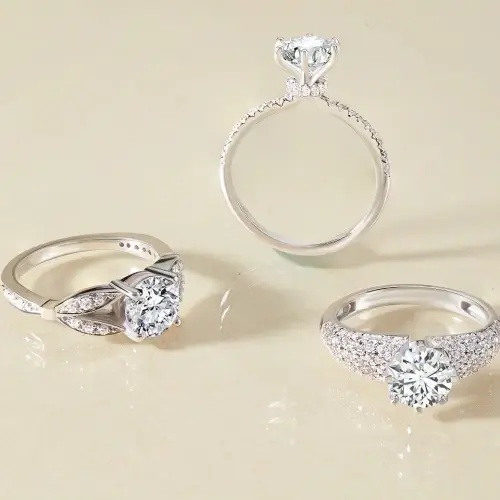
- Prong setting
The diamond is held in its place using metal prongs (usually four or six). It allows maximum light to reach the diamond from all angles.
- Bezel setting
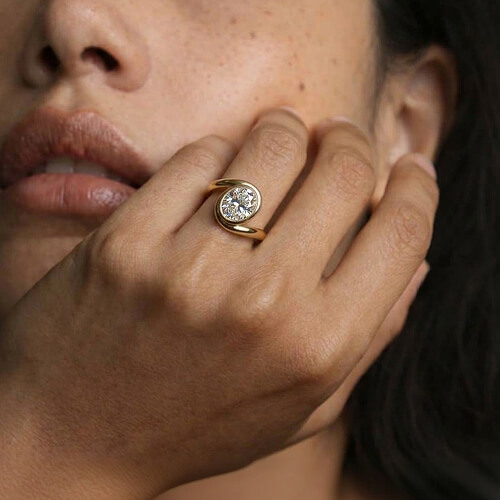
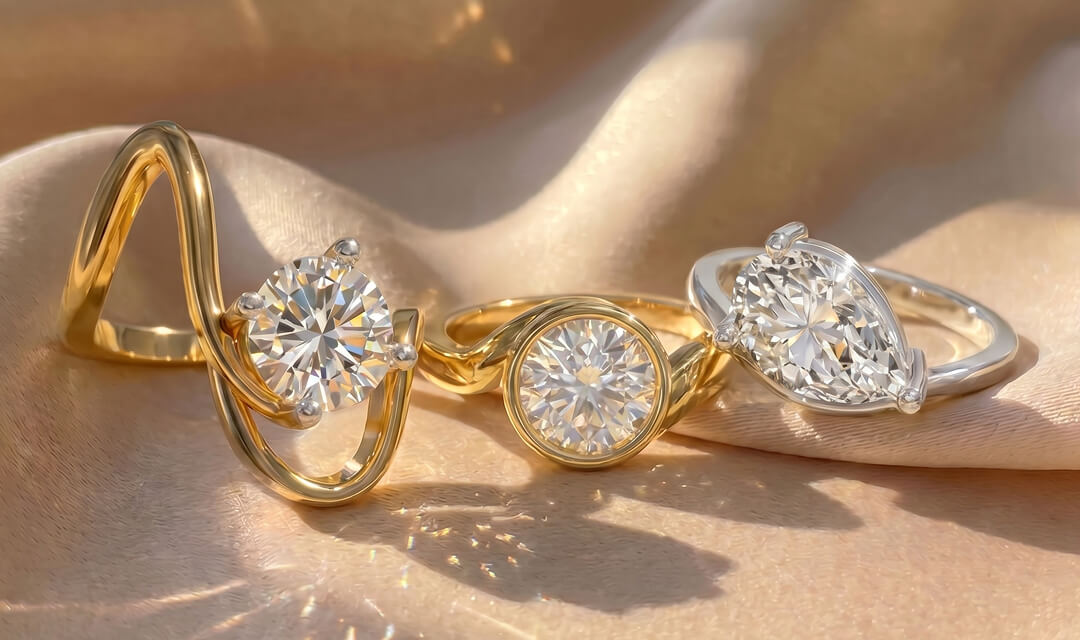
A thin metal rim surrounds the diamond and holds it flush against the band, one of the most secure settings available and a natural choice for an active lifestyle.
- Pavé setting
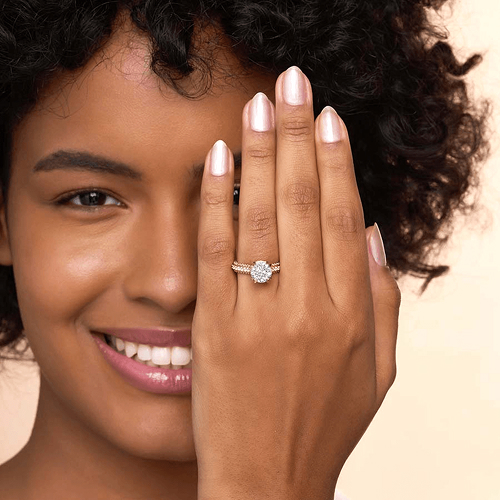
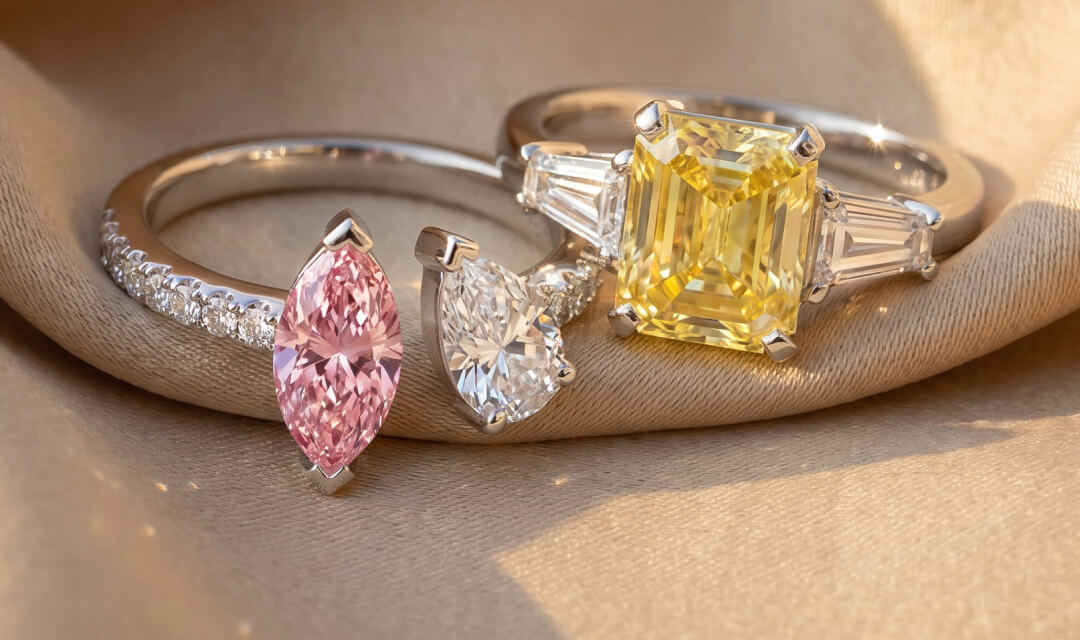
Tiny accent diamonds are set into the band itself and held by small prongs. Thus, creating a “paved” surface of continuous sparkle.
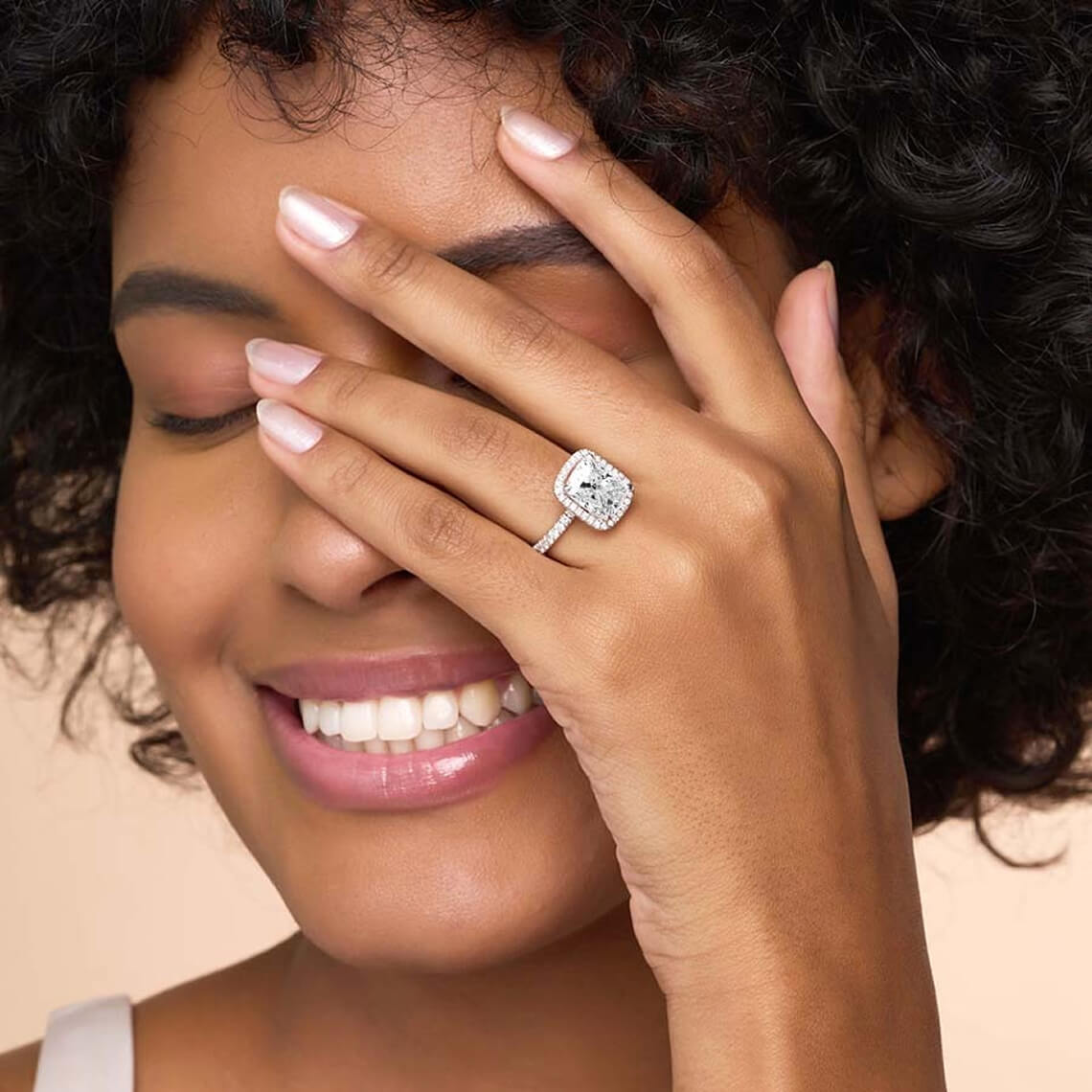
- Halo setting
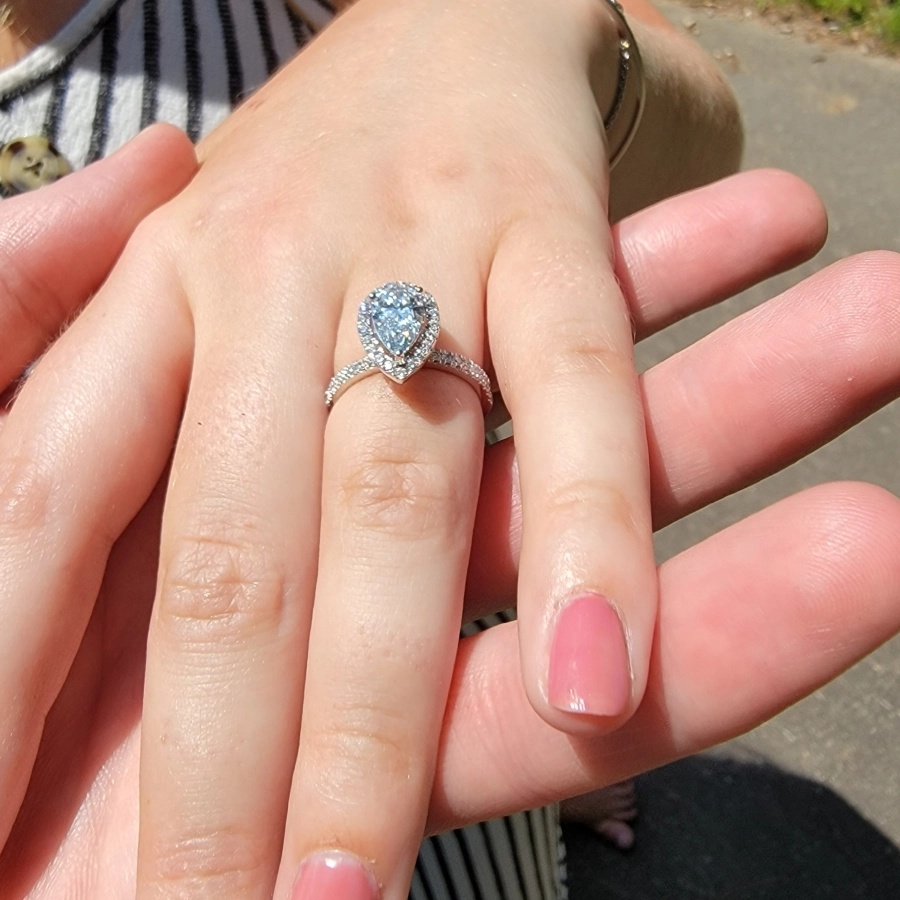
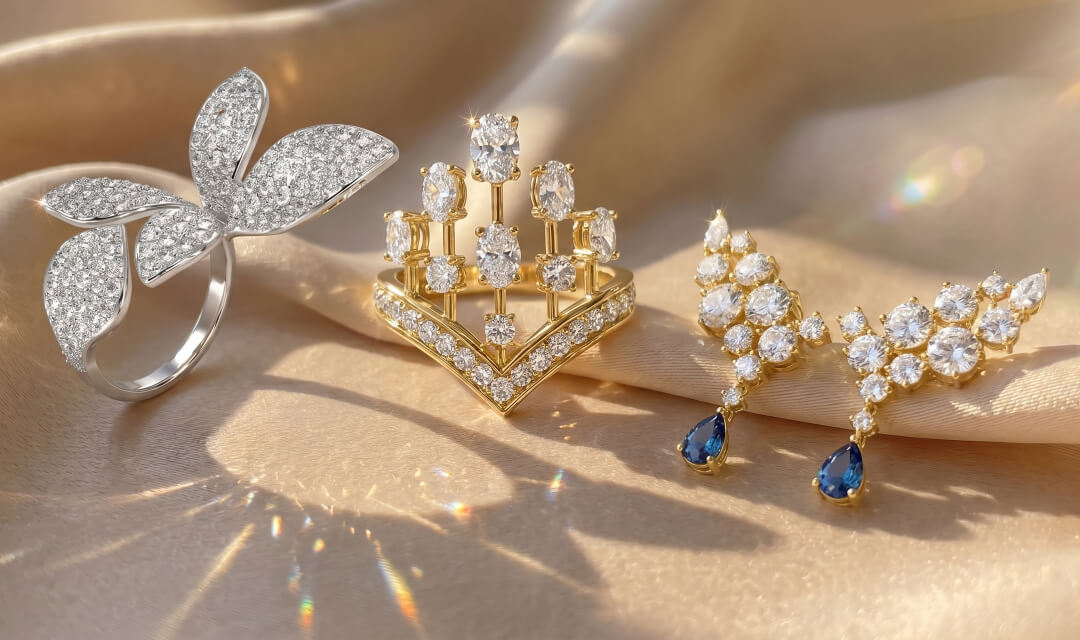
In this setting, a frame of smaller diamonds surrounds the center stone. It creates the illusion of a larger diamond and amplifies its light return.- Channel setting
Accent diamonds are set between two parallel metal walls, flush and protected in this setting. It is sleek, modern, and very durable.
The Prongs: The Unsung Heroes
Four prongs or six? It sounds like a small detail. But it is one of the most practical decisions in ring design.
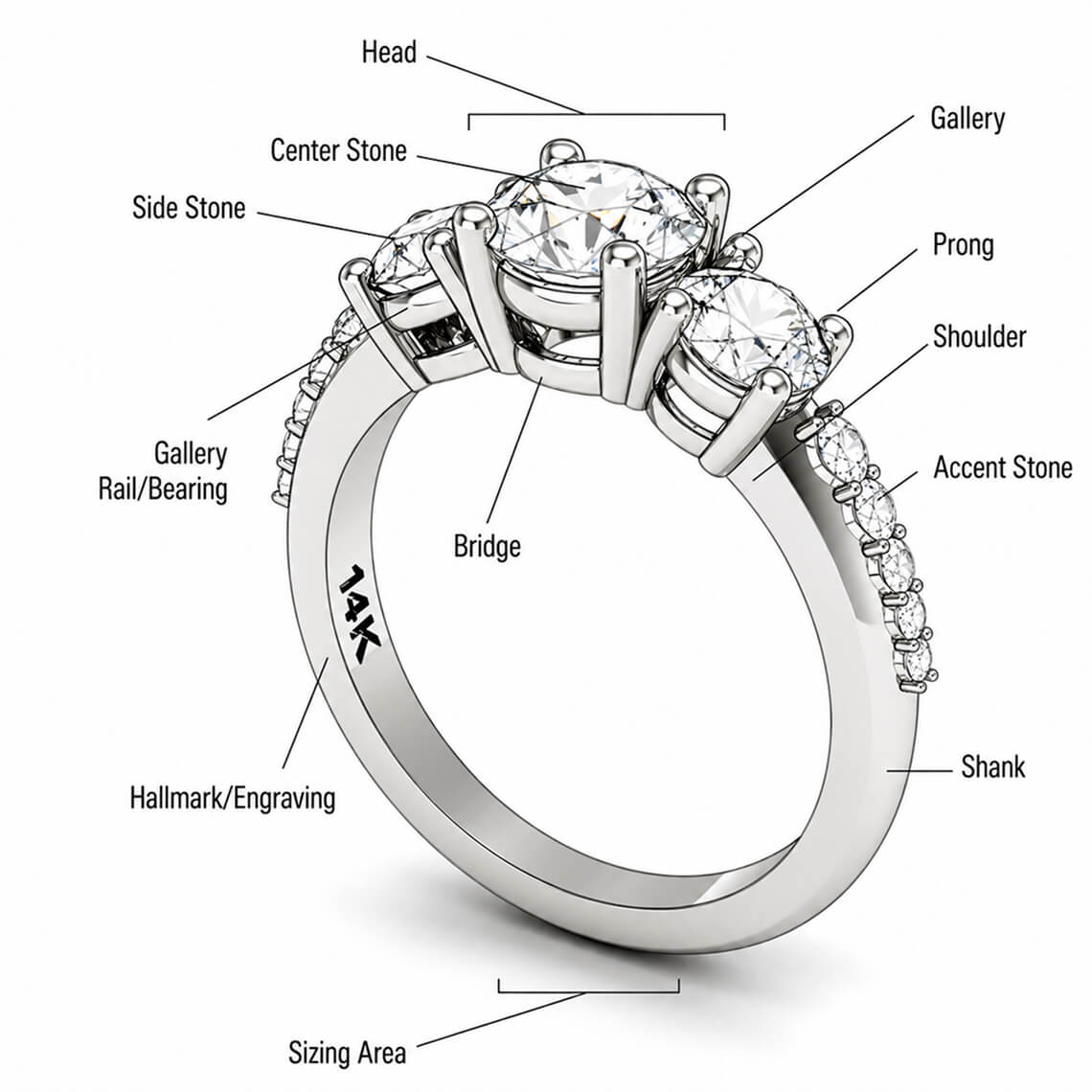
Prongs are the small metal claws that grip the diamond and hold its head. More prongs mean more security, but slightly less exposed diamond surface. Fewer prongs expose more of the stone and allow more light in from the sides, but with slightly less grip.
The thickness of prongs is significant as well. Too delicate prongs can break, while too thick prongs will block light.
The Head: What Cradles The Diamond
The head is the upper portion of the ring that holds the center stone. You can think of it as the frame around the diamond.
The head works with the prongs to determine how elevated the diamond sits. A higher head means the diamond sits higher and appears more prominent. A lower-profile head keeps the diamond closer to the hand and is a more practical choice.
The Shank/Band: More Than Just A Band
The shank is the circular part of the ring that wraps around the finger. But it does a lot more than connect the head to the base of the ring.
Width, shape, and thickness of the band are very important. It determines how the ring looks on your hand and how comfortable it is to wear. A tapered shank becomes thinner as it reaches towards the center stone, thereby diverting attention to the stone and making it appear larger than it is. A straight shank remains consistent in its width and is very clean and simple.
The Shoulders: The Connectors You Never Noticed
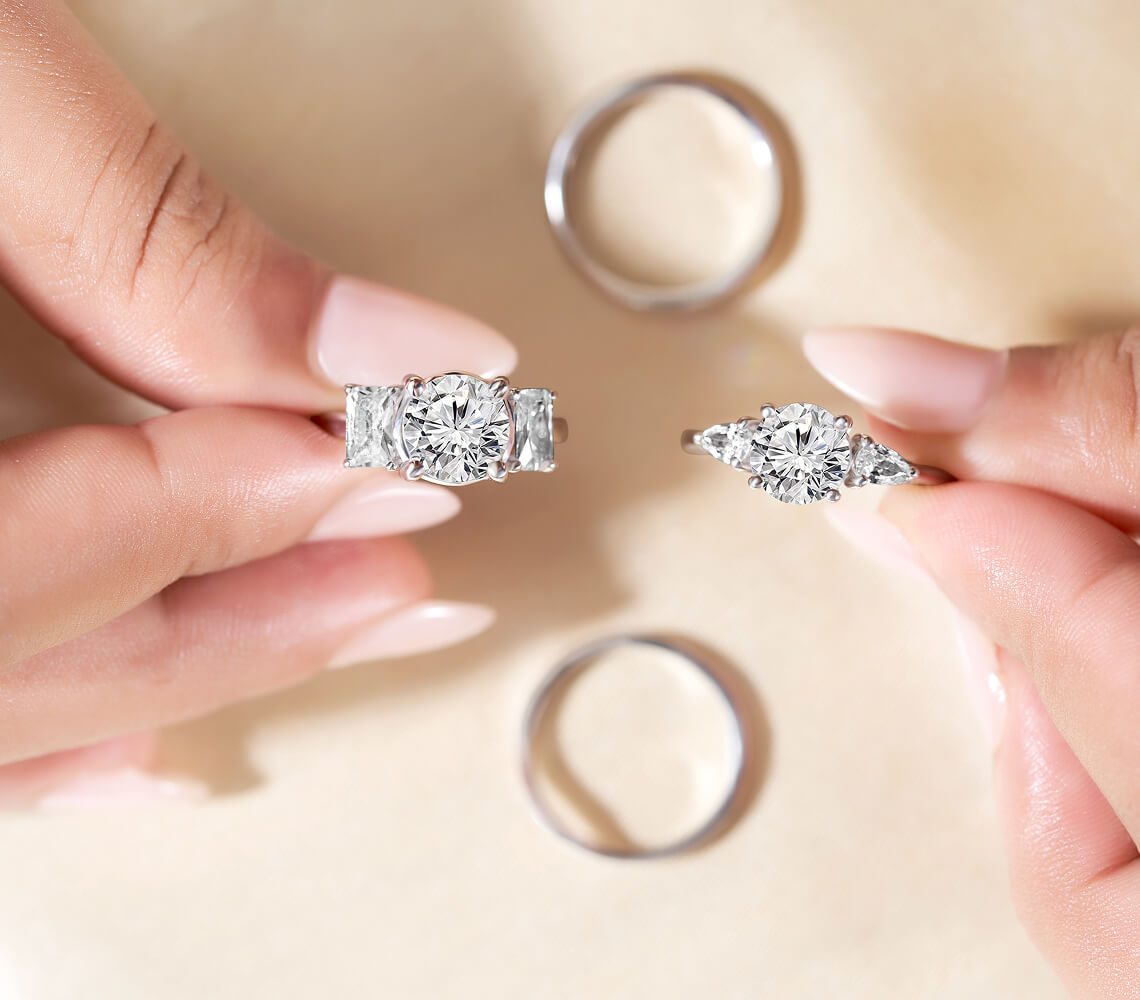
These are the sections of the shank that lead up to the head on either side. They are the bridge between the center stone setting and the band. Also, they are one of the most design-rich areas of the ring.
What shoulders really do is frame the center stone from the sides. A wide embellished shoulder will add drama. On the contrary, a slim, tapered shoulder creates elegance.
The Gallery: The Hidden Detail That Changes Everything
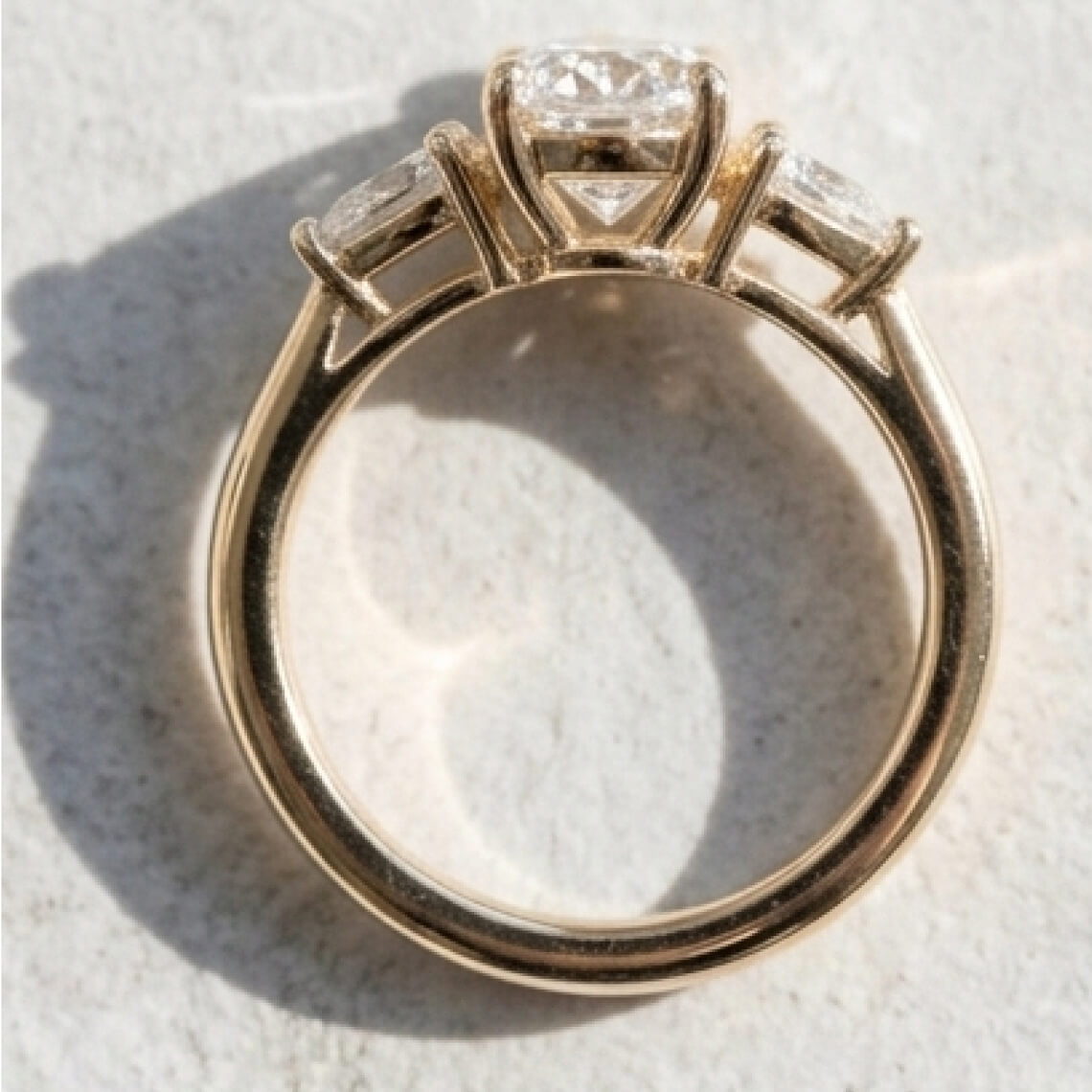
The gallery is the underside of the ring’s head; the portion is only visible when you flip the ring upside down. This is one of the most overlooked components of the ring. Yet it quietly affects the aesthetics as well as the function of the ring.
The best gallery design is one in which light enters the diamond from underneath, improving the diamond’s sparkle and brilliance.
To Sign Off
You have gone from admiring rings to actually understanding them. Every prong, curve, and tiny accent diamond has a name, a purpose, and a role in the bigger picture. You now have the whole engagement ring anatomy picture. This is going to change the way you shop entirely.
Frequently Asked Questions
What is the anatomy of a diamond ring?
The anatomy of a diamond ring is made up of several components, which are the center stone, the setting, the prongs, the head, the shank, the shoulders, and the gallery.
Why does prong count matter?
Prong count can affect the security/appearance of your diamond. A four-prong setting allows more of the diamond to be visible and exposed to light. A six-prong setting offers a stronger grip on the stone.